

rewrite this content and keep HTML tags (remove this from content : rewrite this content and keep HTML tags)
As someone who’d never played a Fatal Frame game before, I wasn’t immediately enticed by the reveal of Crimson Butterfly’s (second) remake last year. Back in the day, I was a bit too scaredy, so I missed the Project Zero train altogether. However, the deeper I looked at Fatal Frame II: Crimson Butterfly Remake’s previews, the more special it seemed.
Of course, other veterans’ encouraging words about the series (and this entry specifically) pushed me in the direction of checking it out. It also helps that, as far as I know, it’s a game that works on its own. No previous homework required… unless you want to get the context of the series’ evolution.
After a breezy run through this modernized remake, I can say Koei Tecmo and Team Ninja approached the endeavour with reverence. There’s a reason it’s been remade again and in much higher fidelity. Minakami Village is a haunting place that will (unfortunately) stay with me for a while, probably turning some of my dreams into nightmares. Mio and Mayu are two great protagonists thrown into a gut-wrenching story that goes beyond the straightforward ghost story the first few chapters play with. The presentation is stellar, giving horror fans textured ambiance and a nostalgia-infused trek across a haunted town that even dares to smartly play with leftover PS2-era visuals.
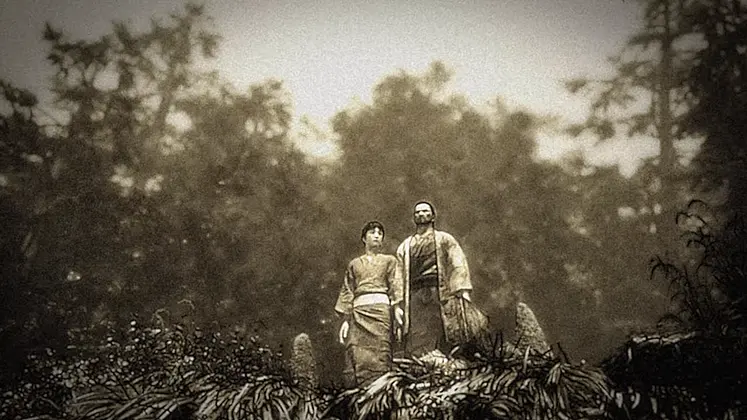
Simply watching videos of the original highlight all the care that’s gone into preserving that cursed placed and this specific story nearly 23 years after it first spooked brave players on much lesser hardware. On the other hand, that ‘look back’ also underlines the wildly uneven gameplay experience is the result of touching up and rethinking chunks of the game which, much like Minakami, were better left alone.
The iconic Camera Obscura doesn’t take long to reach Mio’s hands. First introduced as the only tool that can capture and fight off ghosts, it soon evolves into a more complex device that’s key to solving puzzles, completing investigations, following faint traces of phantoms, and farming other apparitions for upgrade points. Mechanically, it’s immediately interesting and a nice change of pace coming from the typical survival horror experiences which force players to either run away from, smack, or gun down enemies. Well, technically, you’re still “gunning down” ghosts with lightgun-style shooting mechanics, but there’s a rhythm to the Camera Obscura and enemy encounters that’s refreshing, at least in theory.
Sadly, baffling design decisions such as tankier enemies (even the regular ones) that make almost every upgrade feel pointless, stiff movement and dodges, and an overly complicated pile of systems (for what’s ultimately a simple combat loop) bring down the experience and made me wish for a bigger focus on narrative and oppressive atmosphere. Even jumping to the ‘Story’ difficulty won’t make much of a dent on cumbersome combats that end up feeling too long too fast. More egregiously, the back half makes them much more frequent, making the adventure lose much of the tension it builds up during its quieter, more calculated levels.
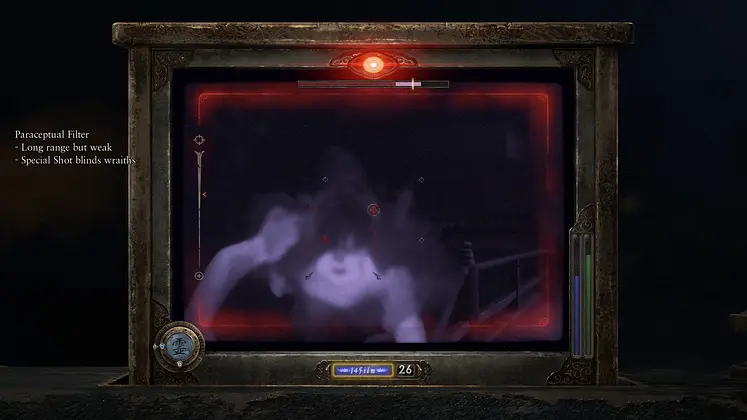
It’s a clash of design styles, really, or at least that’s what it feels like. On the one hand, Fatal Frame II: Crimson Butterfly Remake sticks close to a distant era of horror games that were constantly terrifying because of how limiting the movement options and the resources available were. On the other, there’s an effort to make combat more dynamic and layered, but the surroundings don’t support that idea, and since players have been given more tools to overcome ghostly threats, Team Ninja figured boosting everyone’s HP would add more friction. Instead, what it adds is frustration. ‘Shutter Chance’ and ‘Fatal Frame’ states and attacks help chew through HP bars quicker, but surprise, the “aggravated” state (which is common) makes wraiths regain most of their HP. It’s an endurance test, but not a fun one, and the stamina-like Willpower meter only makes matters worse.
At least until you reach the final sections, where the entire combat system crumbles under the weight of not having the tools to deal with several (unavoidable) enemies at once, this remake isn’t a hard game. Patience and smart positioning (plus an oversupply of film ammo types and passives) are enough to get through most encounters, including the more creative boss battles, but it’s never a good feeling to have a game get in its own way. Stealth isn’t a reliable option either, as the general level design never effectively accommodates its half-baked addition.
Much will be said and written about the decision to go with a traditional third-person camera versus fixed camera angles too. As someone who never cared much for the fixed-camera school of design, I appreciate the switch, especially when the game still manages to scare often and delivers much denser environments which do most of the heavy lifting. But at the same time, it’s easy to notice such creative decisions and technical limitations defined a lot of what Fatal Frame II was trying to accomplish originally, and that included the combat. It’s a different beast for sure, though one that keeps its soul intact.
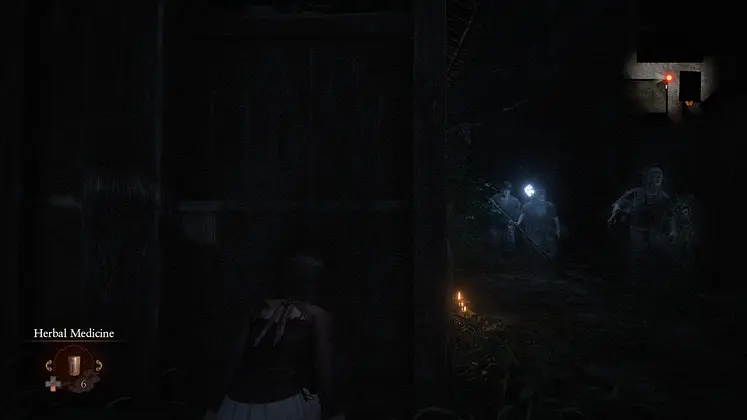
What ultimately hurts and dispels the horror far too often isn’t just the overabundance of combat encounters that outstay their welcome, but also an overreliance on jump scares which stop being scary after a while. There are creative shocks and highly unnerving beats peppered throughout the whole journey, sure, but there’s also a recurring loop of the camera and sound design (which is otherwise immaculate) telegraphing the possibility of a scare repeatedly, especially when you reach to grab an item or open a door. Considering how you execute both actions over and over again, it gets grating soon and removes much of the surprise element.
On the technical side of things, this remake looks current-gen enough, but most of its visual shine comes from the art direction instead. On PC, there’s also a distinct lack of settings that go in-depth (unlike in Nioh 3) and a hard 60 FPS cap that will no doubt bother many. At least the performance is stable in my experience (running a 4070Ti plus 7800X3D combo), with no need for Frame Generation tricks (which the game doesn’t include at the time of writing).
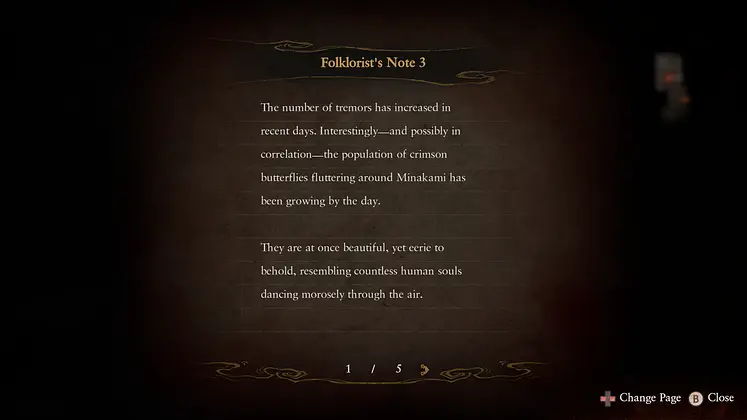
Fatal Frame II: Crimson Butterfly Remake is scarier when it embraces the inherent horror of its layered and twisty story even if some beats will be predictable. The more haunting cutscenes are the ones with striking images that linger in your mind after it’s all over. Pieces of paper and rotten diaries speak of dark folklore and discoveries that would make for fine short horror stories on their own. The Camera Obscura often captures horror not meant for mortal eyes on the faces of slain souls, giving you half-second frights which don’t rely on loud sounds. I believe those elements alone make it a must-play for diehards looking for new thrills in the horror space. It’s just a shame you have to endure the rest to enjoy Mio and Mayu’s bleak tale.
Fatal Frame II: Crimson Butterfly Remake is now available on PC (Steam), PS5, Xbox Series X/S, and Nintendo Switch 2. An evaluation copy was provided by the publisher for this review.
FATAL FRAME II: CRIMSON BUTTERFLY REMAKE VERDICT
Fatal Frame II: Crimson Butterfly Remake successfully captures the soul and voice of a classic while improving on the presentation and scope, but shoddy combat often brings those commendable efforts down.
TOP GAME MOMENT
Getting jump-scared while in the “safety” of a save room.
Good
vs
Bad
Modern and highly detailed presentation that’s faithful to the original
Art direction and sound design work well to create an uneasy atmosphere
Strong storytelling across the board, even in side quests
The right amount of exploration rewards curiosity without padding
Some boss encounters are creative
Clunky, overly complicated combat which doesn’t fit the rest of the game
Too many combat encounters hurt the overall tension
The overabundance of resources makes enemies less scary
Likewise, jump scares get old quick and make frights mostly predictable


